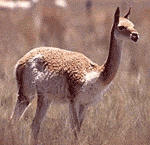
 The vicuna (Vicugna vicugna) - Camels inhabiting the Andes in South America? Sounds quite surprising! Thinking of camels, the One-humped camel or Dromedary (Camelus dromedarius) and the Two-humped camel or Bactrian camel (Camelus ferus) from the African and Asian deserts come to one's mind. But these tall camel species have close relatives in South America - the smaller Llamas or South American camels. This group consists of just two species too: the Guanaco (Lama guanaco), the wild ancestor of the domestic Llama and Alpaca, and the even smaller and daintier Vicuna. Reaching a length of about 1,5 m, a shoulder height of almost one metre and a weight of 55 kg, the Vicuna is the smallest camel species.
Which zoos have them?
Artis (Netherlands)The Vicugna, vicuña is listed as Conservation Dependent (LR/cd), the focus of a continuing taxon-specific or habitat-specific conservation programme targeted towards the taxon in question, the cessation of which would result in the taxon qualifying for one of the threatened categories below within a period of five years, on the IUCN Red List of Threatened Species
Some facts about the
Vicugna
Adult weight : 50 kg (110 lbs)
Maximum longevity : 32 years
Female maturity :730 days
Male maturity : 730 days
Gestation : 340 days
Weaning : 213 days
Litter size : 1
Litters per year : 1
Interval between litters : 548 days
Weight at birth : 5.74 kg (12.628 lbs)

Custom Search