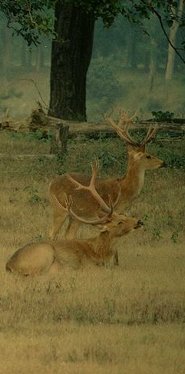
 The Barasingha (cervus duvaucelii) is a beautiful deer that makes its home in Nepal and India, however it is mainly found now in northern India. In this part of India it is known as dolhorina, while in the United States it is called swamp deer.They have beautiful racks of antlers which are known as tines. The tines usually average 12 to 14 tine, but over twenty have been reported. One thing that is different about these deer is that the female only goes into heat once a year, having one foal, although twins have been known to be born as well. . These animals have a life span of 25 years. In the wild they live in herds of around sixty. A herd contains nearly two times as many females as males. The males, or stags weigh between 170 to 180 kg,or between 370 to 400 pounds and stand 132 cm or 52 inches tall at the shoulder. The coloration of these deer is quite beautiful. They have a yellow to brown coat that is often colored by the mud they like to roll around in order to cool off when it's hot. They also appear shaggy, due to long coarse hairs on the outside of their coat. The velvet the males get on their antlers is rubbed off on trees and also thrashing through tall grass as part of the mating ritual.
The Barasingha, swamp deer is listed as Vulnerable (VU), considered to be facing a high risk of extinction in the wild, on the IUCN Red List of Threatened Species
Barasingha habitats
Bogs, Marshes, Swamps, Fens, Peatlands, Forest, Grassland, Subtropical / Tropical Moist Lowland, Subtropical / Tropical Seasonally Wet / Flooded Grassland and Wetlands (inland)Some facts about the
Barasingha
Adult weight : 170 kg (374 lbs)
Maximum longevity : 25 years
Female maturity :1095 days
Gestation : 250 days
Litter size : 1

Custom Search