
Author: ??????? ???? / http://paradoxusik.livejournal.com/
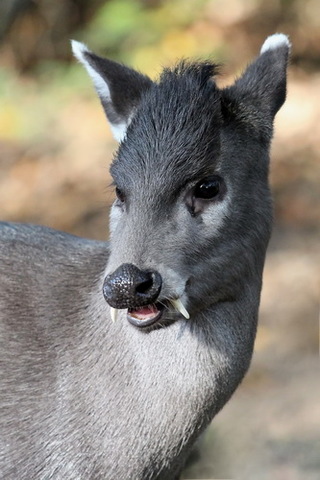
Tufted deer
Order : Artiodactyla
Family : Cervidae
Subfamily : Muntiacinae
Species : Elaphodus cephalophus
Keywords: black
Which zoos have them?
Los Angeles Zoo (United States) and Smithsonian National Zoological Park (United States)The Tufted deer is listed as Data Deficient (DD), inadequate information to make a direct, or indirect, assessment of its risk of extinction, on the IUCN Red List of Threatened Species
Namings for the tufted deer
A young / baby of a tufted deer is called a 'fawn or ass'. The females are called 'doe, hind or cow' and males 'buck, stag or bull'. A tufted deer group is called a 'herd'.Some facts about the
Tufted deer
Adult weight : 33.5 kg (73.7 lbs)
Maximum longevity : 23 years
Female maturity :639 days
Male maturity : 730 days
Gestation : 180 days
Litter size : 1
Facts about the tufted deer
The tufted deer is a terrestrial herbivorous grazer and browser and a source of meat to carnivores such as the leopard and dhole.
The longevity of tufted deer is over 12 years in captivity (Jones, 1993).
html'); CallAdv(); CreateTd(23) Ecology and Behavior The tufted deer is a crepuscular animal, most active at dawn and dusk.
The Tufted Deer is a primitive deer, larger than a muntjac while being similar in appearance.
More animals beginning with T