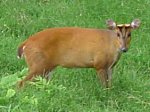
 The Indian Muntjac deer (Muntiacus muntjak), also called the 'barking deer', is the most numerous of the Muntjac deer and lives in South-eastern Asia, in Pakistan, India, Nepal, and along South-eastern Asia and southern China. It gets its nickname 'barking deer' because of their barking like dogs when threatened. Their diet consists of leaves, grasses, shoots, and fallen fruit. Muntjacs are considered a very primitive kind of deer, as they appeared 15-35 million years ago with fossils found in France and Germany. Muntjacs are hunted for their meat and skin, and are considered a pest in some areas, where they destroy the trees by ripping of the bark. The Indian Muntjac is not considered endangered.
 Image of the Muntjac deer, photographed by Pratheepps, licensed under Creative Commons Attribution ShareAlike 2.5
Which zoos have them?
Saint Louis Zoological Park (United States)The Indian muntjac, red muntjac is listed as Least Concern (LR/lc), lowest risk. Does not qualify for a more at risk category. Widespread and abundant taxa are included in this category, on the IUCN Red List of Threatened Species
Countries
Bhutan, Burma, Cambodia, China, India, Indonesia, Laos, Malaysia, Nepal, Pakistan, Sri Lanka, Thailand and VietnamSome facts about the
Indian muntjac
Adult weight : 21 kg (46.2 lbs)
Maximum longevity : 19 years
Female maturity :272 days
Male maturity : 332 days
Gestation : 210 days
Weaning : 61 days
Litter size : 1
Interval between litters : 241 days
Weight at birth : 1.223 kg (2.6906 lbs)

Custom Search