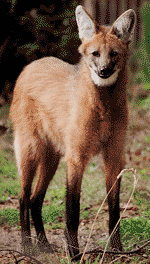
 Somehow the name of this South American canid is a little confusing; the attractive inhabitants of grasslands are not closely related to wolves. More convincing is the first part of their name; Maned wolves (Chrysocyon brachyurus) wear a characteristic black mane, which can be erected, along their backs. The "aguara guazú", as the Maned wolf is called in South America, is one of the most beautiful canids because of its size, its reddish brown fur, its long dark legs, its white throat and tip of the tail and its conspicuous way of moving. As many other conspicuous animals, the Maned wolf plays a role in human myths and rituals. The native South American inhabitants use parts of the fur as amulets or during their religious ceremonies.
Which zoos have them?
Artis (Netherlands), Edinburgh Zoo (United Kingdom), Los Angeles Zoo (United States) and Smithsonian National Zoological Park (United States)The Maned wolf is listed as Near Threatened (NT), is close to qualifying for or is likely to qualify for a threatened category in the near future, on the IUCN Red List of Threatened Species
Namings for the maned wolf
A young / baby of a maned wolf is called a 'cub, pup or whelp'. The females are called 'bitch or fae' and males 'dog or brute'. A maned wolf group is called a 'pack or rout'.Maned wolf habitats
Arable Land, Artificial / Terrestrial, Bogs, Marshes, Swamps, Fens, Peatlands, Dry savanna, Forest, Grassland, Moist savanna, Pastureland, Savanna, Shrubland, Subtropical / Tropical Dry forest, Subtropical / Tropical Dry Grassland, Subtropical / Tropical Dry Shrubland, Subtropical / Tropical Moist Lowland, Subtropical / Tropical Moist Shrubland, Subtropical / Tropical Seasonally Wet / Flooded Grassland and Wetlands (inland)Some facts about the
Maned wolf
Adult weight : 21.5 kg (47.3 lbs)
Maximum longevity : 17 years
Female maturity :730 days
Gestation : 64 days
Weaning : 227 days
Litter size : 3
Weight at birth : 0.368 kg (0.8096 lbs)

Custom Search