 Weight: 5 to 14 kg (11 to 31 lbs)
Body length: 89 to 130 cm (35 to 51 in)
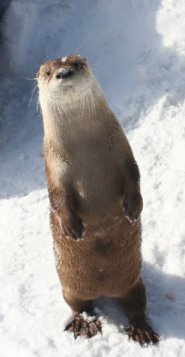
The Northern River Otter (Lontra canadensis), also known as North American River Otter, is a common sight in the waterways of North America, where it can be found in the Pacific Northwest, Alaska, Canada, the Atlantic states, and the Gulf of Mexico. They are active by day and have a streamlined, bulky physique, possessing short legs, a long tail and webbed digits. Northern River Otters have rounded, small heads and large whiskers. Their ears and nostrils are valved to keep out any water when submerged. Their pelage is shiny and brown in color, but usually, their throat is silver-gray in appearance. Not surprisingly, Northern River Otters are strong swimmers and can also move fast on land and are fond of sliding down along riverbanks all the way to the water.
In the wild, they can become ten to fifteen years of age, and under captivity, 20 years is possible.
It is very flexible animal, a Northern River Otter is capable of surviving in many kinds of habitats, such as freshwater, coastal marine, inland wetlands and even marshes. They can bear with differing ranges of temperature and altitudes, but they should be able to have access to two crucial things. First is a consistent supply of food, second is the proximity of water.
Akin to its cousin otters, this particular otter resides in a den, and this "home" is made in hollows, like under logs. It is recorded that they kill beavers to "conquer" their residences. These otters are playful, they slide, swim, chase, wrestle and leap. It makes them favorites to look at in zoos. They are not particularly friendly to humans if brought up in captivity, especially when they reach sexual maturity and begin acting aggressive and defensive.
While not listed as nationally endangered, they are endangered in states. Over 30,000 otter pelts are sold each year in the United States and Canada according to Wikipedia. They are also hunted by bobcats, coyotes, alligators, birds of prey and other large predators.
Interesting fact: When swimming in circles, it creating a whirlpool. This in turn forces the fish up to the surface.
The North american otter, north american river otter, northern river otter is listed as Least Concern. Does not qualify for a more at risk category. Widespread and abundant taxa are included in this category, on the IUCN Red List of Threatened Species
Namings for the northern river otter
A young / baby of a northern river otter is called a 'pup or whelp'. A northern river otter group is called a 'romp, bevy, lodge, family or raft'.Northern river otter habitats
Alpine Wetlands (includes temporary waters from snowmelt), Artificial / Aquatic & Marine, Artificial / Aquatic - Aquaculture Ponds, Artificial / Aquatic - Canals and Drainage Channels, Ditches, Artificial / Aquatic - Ponds (below 8ha), Artificial / Aquatic - Water Storage Areas (over 8ha), Bogs, Marshes, Swamps, Fens, Peatlands, Coastal Brackish / Saline Lagoons / Marine Lakes, Coastal Freshwater Lakes, Coastal Sand Dunes, Estuaries, Freshwater Springs and Oases, Marine Coastal / Supratidal, Marine Intertidal, Marine Neritic, Mud Flats and Salt Flats, Permanent Freshwater Lakes (over 8ha), Permanent Freshwater Marshes / Pools (under 8ha), Permanent Inland Deltas, Permanent Rivers / Streams / Creeks (includes waterfalls), Permanent Saline, Brackish or Alkaline Lakes, Permanent Saline, Brackish or Alkaline Marshes / Pools, Rocky Shoreline, Salt Marshes (Emergent Grasses), Seasonal / Intermittent Freshwater Lakes (over 8ha), Seasonal / Intermittent Freshwater Marshes / Pools (under 8ha), Seasonal / Intermittent Saline, Brackish or Alkaline Lakes and Flats, Seasonal / Intermittent Saline, Brackish or Alkaline Marshes / Pools, Seasonal / Intermittent / Irregular Rivers / Streams / Creeks, Shrub Dominated Wetlands and Wetlands (inland)Some facts about the
Northern river otter
Adult weight : 9 kg (19.8 lbs)
Maximum longevity : 27 years
Female maturity :730 days
Male maturity : 730 days
Gestation : 62 days
Weaning : 122 days
Litter size : 3
Litters per year : 1
Interval between litters : 365 days
Weight at birth : 0.14 kg (0.308 lbs)
Weight at weaning : 1.51 kg (3.322 lbs)

Custom Search