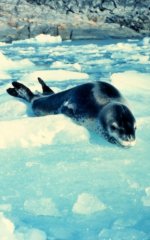
 The Leopard Seal (Hydrurga leptonyx) is a "true seal", because they cannot "walk", rather crawl and do not have external ears. Leopard seals are large and very strong, the females can become the largest in length, reaching up to 3 and a half metres and weighing 600 kilograms (!). They hunt in the cold waters surrounding Antarctica for a variety of animals including penguins, squid, fish, and even other seals as the Crabeater Seals. I also wanted to share this link to a winning photograph of a leopard seal of the Wildlife Photographer of the Year Competition, 2005
The Leopard seal is listed as Least Concern (LR/lc), lowest risk. Does not qualify for a more at risk category. Widespread and abundant taxa are included in this category, on the IUCN Red List of Threatened Species
Namings for the leopard seal
A young / baby of a leopard seal is called a 'pup'. The females are called 'cow' and males 'bull'. A leopard seal group is called a 'pod, colony, crash, flock, harem, bob, herd, rookery, team or hurd'.Countries
Antarctica, Bouvet Island, Heard Island and McDonald Islands and South Georgia and the South Sandwich IslandsSome facts about the
Leopard seal
Adult weight : 367.75 kg (809.05 lbs)
Female maturity :1095 days
Male maturity : 1461 days
Gestation : 274 days
Weaning : 30 days
Litter size : 1
Weight at birth : 30 kg (66 lbs)

Custom Search