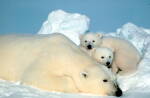
 The polar bear (Ursus maritimus) lives on the Arctic (this is around the North pole, don't confuse it with Antarctica - the Ant in Antarctica actually means opposite to). It is the largest of four currently recognized species of bear in the genus Ursus, which also includes the brown bear. It is the Apex predator in its territorium (this means it is not preyed upon, also called superpredator or alphapredator) and is perfectly adapted to life on the Arctic, with a thick layer of fat and fur acting as camouflage. Their paw pads with rough surfaces help prevent polar bears from slipping up on the ice. If you are concerned with global warming and the possible loss of habitat this causes for the Polar Bear, be sure to read this excellent page. Polar bears are completely dependent upon the sea ice for survival. From biologicaldiversity.org: "Polar bears use sea ice for virtually all of their essential behaviors including feeding, mating, travel, and maternity denning. They cannot survive the loss of sea ice habitat that will occur if current levels of greenhouse gas emissions continue.
The Polar bear is listed as Vulnerable (VU), considered to be facing a high risk of extinction in the wild, on the IUCN Red List of Threatened Species
Namings for the polar bear
A young / baby of a polar bear is called a 'cub'. The females are called 'sow' and males 'boar'. A polar bear group is called a 'stocks or populations'.Polar bear habitats
Epipelagic (0-200m), Estuaries, Marine Intertidal, Marine Neritic, Marine Oceanic, Pelagic, Rocky Shoreline, Shingle and / or Pebble Shoreline and / or Beaches, Shrubland and Subarctic ShrublandSome facts about the
Polar bear
Adult weight : 475 kg (1045 lbs)
Maximum longevity : 44 years
Female maturity :1734 days
Male maturity : 1734 days
Gestation : 230 days
Weaning : 303 days
Litter size : 2
Interval between litters : 750 days
Weight at birth : 0.665 kg (1.463 lbs)
Weight at weaning : 27 kg (59.4 lbs)

Custom Search