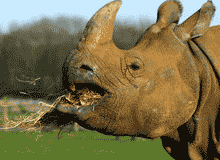
 The Indian rhinoceros (Rhinoceros unicornis), also called One-horned rhinoceros, is one of the largest mammals living on solid ground. Just Elephants and the African White rhinoceros are even larger. Males reach lengths of about 3,5 m and weights of 2200 kg. Females are not much smaller but less massive and "just" weigh about 1700 kg. All Rhinoceros species have relatively small eyes but large ears, which can be orientated to different directions. But their most conspicuous markings are their large horns. They are completely different from other structures like antlers of Deer and horns of Cows, Antelopes and other Bovids. While most of the other Rhinoceros species wear two horns, the Indian Rhinoceros wears a single one. Besides the canine teeth of the lower jaw it is used during intraspecific clashes. The skin of the Indian rhinoceros is divided into several areas by wrinkles. These areas appear like parts of an armour plating.
Keywords:
Which zoos have them?
Los Angeles Zoo (United States)The Great indian rhinoceros, indian rhinoceros is listed as Endangered (EN), considered to be facing a very high risk of extinction in the wild, on the IUCN Red List of Threatened Species
Namings for the Indian rhinoceros
A young / baby of a Indian rhinoceros is called a 'calf'. The females are called 'cow' and males 'bull'. A Indian rhinoceros group is called a 'crash or herd'.Some facts about the
Indian rhinoceros
Adult weight : 1602.33 kg (3525.126 lbs)
Maximum longevity : 44 years
Female maturity :1678 days
Male maturity : 2557 days
Gestation : 479 days
Weaning : 456 days
Litter size : 1
Interval between litters : 850 days
Weight at birth : 58 kg (127.6 lbs)
Weight at weaning : 885.812 kg (1948.7864 lbs)

Custom Search