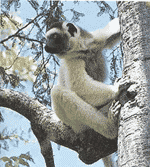
 Have you ever seen an Indri (Indri indri) ? Probably not - at least you should have been to Madagascar. No zoo in the world is able to keep this largest prosimian. But even on Madagascar, where they are endemic, it's not very likely to observe indris. Except a narrow strip at the eastern coast most of their natural habitat, the rainforest, is destroyed. Indris are amongst the most endangered species.
 Even if you are luckily you meet Indris it's more likely to hear their
The Indri is listed as Endangered (EN), considered to be facing a very high risk of extinction in the wild, on the IUCN Red List of Threatened Species
Countries
Madagascar
Custom Search