
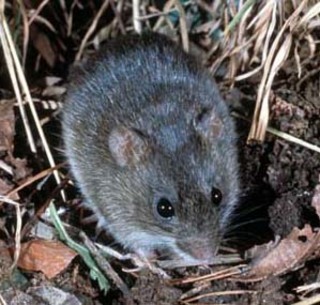
Marsh rice rat
Order : Rodentia
Suborder : Sciurognathi
Family : Muridae
Subfamily : Sigmodontinae
Species : Oryzomys palustris
Keywords: black , brown , gray
The Marsh rice rat is listed as Least Concern (LR/lc), lowest risk. Does not qualify for a more at risk category. Widespread and abundant taxa are included in this category, on the IUCN Red List of Threatened Species
Namings for the marsh rice rat
A young / baby of a marsh rice rat is called a 'kitten, nestling, pinkie or pup'. The females are called 'doe' and males 'buck'. A marsh rice rat group is called a 'colony, horde, pack, plague or swarm'.Countries
United StatesMarsh rice rat habitats
Bogs, Marshes, Swamps, Fens, Peatlands, Forest, Grassland, Permanent Saline, Brackish or Alkaline Marshes / Pools, Subtropical / Tropical Seasonally Wet / Flooded Grassland, Subtropical / Tropical Swamp and Wetlands (inland)
Facts about the marsh rice rat
The area of maximum sympatry incorporates the ranges of only five of the six species; Oryzomys palustris is found south of the site.
The Marsh Rice Rat is active at night.
The rice rat (Oryzomys palustris) is slightly smaller than the cotton rat, having a head and body 5 - 6 inches long, plus a very long, 4- to 7-inch tail.
TYPICAL HABITAT: The marsh rice rat is mainly found in marshes and swamps, or along their edges. (Full text)
BEHAVIOR: Marsh rice rats are mainly nocturnal and semiaquatic. (Full text)
The marsh rice rat is about 7-12 inches long, with the tail making up 3. (Full text)
Marsh rice rats are among the most common mammals in tidal marshes of the Gulf and Atlantic coasts. (Full text)
htm CDC "All About Hantaviruses": Transmission: Meet the Rodents: The Rice Rat (Oryzomys palustris) is slightly smaller than the cotton rat, having a head and body 5 - 6 inches long, plus a very long, 4- to 7-inch tail. (Full text)
rice rat The Rice Rat (Oryzomys palustris) is slightly smaller than the cotton rat, having a head and body 5 - 6 inches long, plus (Full text)
) The Rice Rat (Oryzomys palustris) is slightly smaller than the cotton rat, having a head and body 5 - 6 inches long, plus a very long, 4- to 7-inch tail. (Full text)
The marsh rice rat is also adapted to the salt marsh habitat (Webster et al. (Full text)
Endangered Status The Rice Rat, a subspecies of the Marsh Rice Rat, is on the U. (Full text)
The marsh rice rat is semiaquatic, (Full text)
The marsh rice rat is omnivorous, with about equal amounts of plant and animal matter making up the diet, although the types of food eaten varies with season and availability. (Full text)
The Rice Rat (Oryzomys palustris) is slightly smaller than the cotton rat, having a head and body 5 - 6 inches long, plus a very long, 4- to (Full text)
Lower Keys Rice Rat — Oryzomys palustris natator The endangered lower keys rice rat (or marsh rice rat) is widespread in the lower Florida Keys, but apparently absent from the upper and middle Florida Keys (Schwartz, 1952; Goodyear, 1987). (Full text)
More animals beginning with M