new - Animal forum

Subscribe to
"Animal of the day"

AddThis Feed Button
Or subscribe by e-mail

Enter your Email


Powered by FeedBlitz

We hope that reader will gain an increased appreciation of the need for more conservation measure in order to protect the beautiful creatures that inhabit the earth. Our philosophy is that the more we learn about animals, the more we respect them and take better care of them. That is why we update this blog with new animals, We encourage you to syndicate our content by adding "animal of the day" to your own blog! (read more)

About us

Our mission is to get people excited about animals and their welfare by writing articles on these animals. We encourage people to comment on posts and share with others. Don't forget to subscribe to our feed.

Contact us
Copyright notice

Funny animal videos and pictures

Swimming with manatees - harmful or helpful

Last Comments

janicka (Ribbon seal): i love the ribbon seal i …
bob (Fattest cat in th…): DUUUUUUUUUUUUUUUUUUUUUUUU…
P.L. Frederick (Ribbon seal): This seal is new to me — …
kenneth maldonado… (Ribbon seal): unbelievably cute.Why hav…
jenny (Impala - don't sh…): i totally luv imppalas th…
coco (Impala - don't sh…): i luv impalas they are my…
cicimici (Ribbon seal): me also did`t heard about…
Doriesmom (Ribbon seal): What an interesting seal.…
mry (Pudu - smallest d…): Tasty, with Fries and Béa…
lane (Bush dog): does the bushdog have any…

Calendar

« May 2008
S M T W T F S
        1 2 3
4 5 6 7 8 9 10
11 12 13 14 15 16 17
18 19 20 21 22 23 24
25 26 27 28 29 30 31

Archives

Next Archive Previous Archive

01 May - 31 May 2008
01 Apr - 30 Apr 2008
01 Mar - 31 Mar 2008
01 Feb - 28 Feb 2008
01 Jan - 31 Jan 2008
01 Dec - 31 Dec 2007
01 Nov - 30 Nov 2007
01 Oct - 31 Oct 2007
01 Sep - 30 Sep 2007
01 Aug - 31 Aug 2007
01 Jul - 31 Jul 2007
01 Jun - 30 Jun 2007
01 May - 31 May 2007
01 Apr - 30 Apr 2007
01 Mar - 31 Mar 2007
01 Feb - 28 Feb 2007
01 Jan - 31 Jan 2007
01 Dec - 31 Dec 2006
01 Nov - 30 Nov 2006
01 Oct - 31 Oct 2006
01 Sep - 30 Sep 2006
01 Aug - 31 Aug 2006
01 Jul - 31 Jul 2006
01 Jun - 30 Jun 2006
01 May - 31 May 2006
01 Apr - 30 Apr 2006
01 Mar - 31 Mar 2006
01 Feb - 28 Feb 2006
01 Jan - 31 Jan 2006
01 Dec - 31 Dec 2005
01 Nov - 30 Nov 2005
01 Oct - 31 Oct 2005
01 Sep - 30 Sep 2005
01 Aug - 31 Aug 2005
01 Jul - 31 Jul 2005

Animal posters
Animal pictures
Mammals.start4all.com
Animal diversity web
Recently extinct animals forum
PetLvr.com
Another chance to see
Happiness is a warm puppy

Miscellany

AddThis Feed Button

Sunday 31 December 2006 Black Rhinoceros

black rhinoThe Black rhinoceros (Diceros bicornis) is critically endangered. They are threatened by excessive poaching for their horns, which is used in traditional Chinese medicine and for dagger handles in Yemen and Oman. Rhinoceroses are classified as part of the order of Perrissodactyla (in which also horses reside), suborder Ceratomorpha, which contains two families of slower-moving, thick-set animals with several functional toes: tapirs and the rhinoceroses. They can weigh up to 1400 kilograms. Black rhinoceroses' horn can grow up to 140 centimeters (!), and usually they have two horns, but occasionaly a third develops. The word rhinoceros comes from the Greek words rhino (nose) and keros (horn). Adult Black rhinoceroses do not have any natural enemies. The young are occasionaly taken by lions or hyenas. Their aggressive disposition discourages its predators. Because of its nearsightedness, the rhino charges first and investigates later.
You can help spreading the word about this animal by stumbling it by pressing this link StumbleUpon or discuss things in our Animal Forum

Add your thoughts about this animal - Permanent Link

Wednesday 27 December 2006 North Atlantic Right Whale
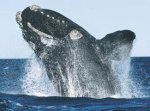
Northern right whaleThe North Atlantic Right Whale (Eubalaena glacialis) can grow up to 18 meters and weigh up to 100,000 kilograms. They were named 'right' whale by fisherman, because they thought it was the right whale to hunt, as they swim close to the shore, float when killed and 40 % of their body is blubber. Baleen whales feed with their baleen, they 'skim' the water with their mouth open. Water and prey come into the mouth of the whale, but only the water can pass throught, leaving prey like zooplankton, krill, little shrimps behind. There are about 300 Atlantic Northern Right Whales living today, almost all in the western North Atlantic, and are an endangered species.
You can help spreading the word about this animal by stumbling it by pressing this link StumbleUpon or discuss things in our Animal Forum

one comment - Permanent Link

Tuesday 26 December 2006 European polecat

European polecat The European Polecat (Mustela putorius), also called a 'fitch', is a mainly nocturnal, solitary creature. Their diet consists mainly on rodents and rabbits. In England, domestic ferrets have abandonned their bosses wich has led to ferret-polecat hybrids... They have also been introduced in New Zealand. Males and females differ a lot. Males can be two times the weight of a female and be a third or more longer. Polecats have a pair of anal glands that emit a strong-smelling secretion, like all mustelids. When they are excited or threatened they release some of the contents of these glands.

Image by Malene Thyssen, licensed under GFDL.

You can help spreading the word about this animal by stumbling it by pressing this link StumbleUpon or discuss things in our Animal Forum

Add your thoughts about this animal - Permanent Link

Friday 22 December 2006 Red-bellied lemur

Red bellied lemurThe Red-bellied Lemur (Lemur rubriventer) lives in the East-Madagascar rainforests, where it feeds on flowers, fruits and leaves and some toxic millipedes, which they drool on first, to neutralize the toxins. They exhibit both diurnal and nocturnal activities, though mainly diurnal. Females lead the groups foraging of about 5 lemurs. Lemurs use their lower incisors as a comb to groom troop members. They use, among other communications, chemicals to communicate. The prominent forehead scent gland of males is used to help mark territories..
You can help spreading the word about this animal by stumbling it by pressing this link StumbleUpon or discuss things in our Animal Forum

one comment - Permanent Link

Wednesday 20 December 2006 Order Perissodactyla (odd-toed ungulates)
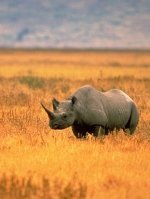
odd toed ungulates The members of the order of Perissodactyla all have an odd number of toes on their hooves. Living members are from the families Equidae (horses, asses, zebra's), Tapiridae (tapirs) and Rhinocerotidae (rhinoceroses). If you are interested in extinct species, about 10 million years after the dinosaurs died out, the order of Perissodactyla began to rise, with bizarre species like the Chalicothere or check out this giant extinct rhino (twice the size of an elephant).

Featured members are:

- the donkey

- the horse

- the zebra

- the brazillian tapir

- the white rhinoceros

- the black rhinoceros

- the indian rhinoceros

You can help spreading the word about this animal by stumbling it by pressing this link StumbleUpon or discuss things in our Animal Forum

Add your thoughts about this animal - Permanent Link

Tuesday 19 December 2006 Order Lagomorpha (hares, rabbits and pikas)
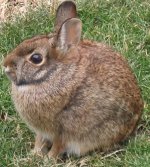
Lagomorpha The order of Lagomorpha consists of two familes: Leporidae (hares and rabbits) and Ochotonidae (pikas). The members of Lagomorpha are sometimes mistaken for rodents, but there are a lot of differences between rodents and members of Lagomorpha. From wikipedia:

- Lagomorphs (loģ o-moŕ fs)(Gr. lagos, hare: + morphē, form) differ from rodents in that:
- they have four incisors in the upper jaw (not two as in rodents);
- they will only eat vegetation (unlike rodents, who will eat meat and vegetation)
- the male's scrotum is in front of the penis;
- the penis has no bone (baculum) unlike the rodent penis; and
- they will redigest first-time droppings (called cecotropes) to obtain the most from their plant diet.


They resemble rodents, however, in that their teeth grow throughout their life, thus necessitating constant chewing to keep them from growing too long.

Featured members are

You can help spreading the word about this animal by stumbling it by pressing this link StumbleUpon or discuss things in our Animal Forum

Add your thoughts about this animal - Permanent Link

Monday 18 December 2006 Hawaiian Monk Seal

hawaiian monk sealThe Hawaiian Monk Seal (Monachus schauinslandi) lives in the warm waters of the North-western part of the Hawaiian islands. It has gotten its name, because its head with the small hairs looks like the head of a typical monk. Also, the Hawaiian Monk Seal leads a more solitary life (like monks) when compared to other seals. They can stay under water for as long as 20 minutes without coming to the surface and to a depth of 600 feet. The Hawaiian Monk Seal is one of the most endangered species of seals. Together with the Mediterranean Monk Seal they struggle for survival to prevent extinction like the Caribbean Monk Seal, which became extinct in the 1950s. In 2004 the estimate of the total population of Hawaiian monk seals was 1400 animals. The reasons for their decline are: increased human presence, sharks, Ciguatera poisoning (a bacteria) and fishing nets.
You can help spreading the word about this animal by stumbling it by pressing this link StumbleUpon or discuss things in our Animal Forum

two comments - Permanent Link

Thursday 14 December 2006 Plains Zebra

zebraThe Plains Zebra (Equus quagga) is the most common and geographically widespread form of zebras, although they were once more numerous than they are now because of human activities such as hunting them for their meat and hides, as well as encroachment on much of their former habitat. No two individuals look exactly alike. They form groups with one stallion and one, two or more mares. Plains zebras are the first to move into a well-vegitated area, and afterwards gazelle and wildebeest take over. Plains zebras prefer young and fresh grasses.
You can help spreading the word about this animal by stumbling it by pressing this link StumbleUpon or discuss things in our Animal Forum

Add your thoughts about this animal - Permanent Link

Monday 11 December 2006 North American Beaver
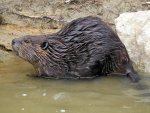
North american beaverThe North American Beaver (Castor canadensis) lives in Canada, most of the United states and Northern Mexico. It is the second largest rodent in the world, the largest rodent in the world is the capybara. The North American Beaver has webbed hind feet for swimming and unwebbed front paws (clawed, used for digging and carrying material for dams for example). In some areas they are viewed as pests, because they flood rivers with their dams and are very persistent to repair any damage to the dam. Most of the time, the only way to stop them is to move them to another location. Predators of the North American Beaver are the Red Fox, Gray Wolf, Bobcat and the Coyote.

Image by LASZLO ILYES (laszlo-photo) from Cleveland, Ohio, USA, licensed under Creative Commons Attribution 2.0 License

You can help spreading the word about this animal by stumbling it by pressing this link StumbleUpon or discuss things in our Animal Forum

one comment - Permanent Link

Tuesday 05 December 2006 Sea otter - largest of the otters

Enhydra Lutris The sea otter (Enhydra lutris) is the heaviest of its kind, weighing up to 45 kg. It has been hunted extensively in the eighteenth and nineteenth century for its warm fur. As a positive side effect, due to the hunting, to maximize profits the sea otter's behavior was researched extensively. The sea otter (Enhydra lutris) is the largest member of the family Mustelidae. It is also the only marine mammal in the order of Carnivora and is the smallest marine mammal. If sea otters rest they are among kelp or in quiet water, laying on their backs. The common resting position is with the head up, with folded paws and chin resting on their chest.
You can help spreading the word about this animal by stumbling it by pressing this link StumbleUpon or discuss things in our Animal Forum

Add your thoughts about this animal - Permanent Link

Sunday 03 December 2006 Cheetah - The African savannas' fastest hunter

fastest land mammal The cheetah (Acinonyx jubatus) is the fastest mammal living on solid ground. The slender, long-legged cats are capable to reach top speeds of up to 120 km/h. Cheetahs are up to 1,5 meters long and weigh up to 65 kg. Remarkable is their relativly small head. Above all Cheetahs inhabit steppe and semi-deserts south of the Sahara nowadays. In former times Cheetahs were spread in entire Africa and parts of Asia, except the rainforests and deserts.

Cheetahs live solitary or in small groups. Such group of cats may for example consist of a female and her young, up to 2 years old. But also males join together to groups sometimes. Cheetahs inhabit home ranges which are sized about 100 square kilometers. The 1 up to 5 young are born after a pregnancy of about 3 months. They are weaned when half a year old but stay with their mother until they are sexually matured at an age of about 2 years. Cheetahs may reach an age of up to 15 years.

(more)
You can help spreading the word about this animal by stumbling it by pressing this link StumbleUpon or discuss things in our Animal Forum

one comment - Permanent Link


Animal of the Day
Subscribe to the
animal of the day
Enter your Email


Powered by FeedBlitz